
6 Insane Industrial Design Hacks to Prevent Project Delays & Save Money
Industrial construction projects often face significant delays, budget overruns, and operational inefficiencies due to poor planning, outdated workflows, and unexpected roadblocks. Without a well-thought-out industrial design strategy, these challenges can escalate, leading to disruptions that impact profitability, production timelines, and overall business operations. A lack of strategic industrial design can result in inefficient layouts, compliance issues, and costly modifications that hinder long-term success.
For Industrial Visionaries and Business Owners, understanding the principles of smart industrial design is crucial for ensuring smooth project execution, reducing unnecessary costs, and future-proofing industrial spaces for long-term success. A strong industrial design approach is not just about aesthetics—it influences everything from workflow efficiency and resource management to safety protocols, regulatory compliance, and adaptability to future technological advancements.
A well-executed industrial design strategy prioritizes scalability, sustainability, and streamlined operations, allowing businesses to proactively eliminate inefficiencies, minimize downtime, and enhance overall productivity. With an optimized industrial design, facilities can support seamless logistics, improve energy efficiency, and accommodate evolving industry demands without frequent disruptions or costly rework.
By implementing the right industrial design strategies, business owners can experience faster project completion, improved operational efficiency, seamless regulatory compliance, and significant long-term cost savings. On the other hand, failing to adopt smart industrial design principles can lead to project stagnation, excessive expenses, and a diminished competitive edge in an increasingly demanding marketplace.
To help you stay ahead, let’s explore six insane industrial design hacks that can prevent costly delays, maximize efficiency, and set your industrial project up for long-term success. These strategies will not only enhance project outcomes but also ensure that your industrial design supports growth, innovation, and sustainability in the years to come.

1. Having a scalable design flow which helps in expanding your business:
A rigid industrial design that lacks adaptability can severely limit a facility’s ability to grow and evolve with changing business demands. When expansion becomes necessary, businesses often face costly modifications, inefficient workarounds, and prolonged downtime that disrupt operations and inflate budgets. Without a future-ready industrial design, companies may struggle to accommodate new technologies, increased production capacities, or evolving regulatory requirements, leading to operational bottlenecks and reduced competitiveness. A poorly planned industrial design can also result in inefficient use of space, higher energy consumption, and logistical inefficiencies that make scaling up operations both expensive and time-consuming.
Adopting a modular and scalable industrial design approach ensures long-term flexibility, smooth workflow adjustments, and seamless integration of technological upgrades. A well-planned industrial facility should be designed to expand effortlessly without major structural modifications, allowing businesses to scale operations in response to market demands. By prioritizing adaptability in industrial design, companies can future-proof their facilities, ensuring that growth is not hindered by structural limitations, outdated layouts, or lack of space for new equipment and automation systems.
Investing in pre-engineered buildings, prefabricated structures, and flexible layouts as part of a forward-thinking industrial design approach allows industrialists to save time and costs while significantly reducing downtime during expansions. Modular construction techniques enable businesses to add or reconfigure sections of their facilities with minimal disruption, ensuring continued productivity even as the facility grows. A scalable industrial design also improves resource efficiency, allowing for better workflow management and reduced material wastage. Additionally, designing with scalability in mind from the outset helps prevent expensive redesigns, costly rework, and production slowdowns that could impact profitability.
By integrating smart industrial design strategies that emphasize adaptability, modularity, and efficiency, businesses can create industrial spaces that support long-term success, maintain operational efficiency, and seamlessly accommodate future growth without excessive costs or downtime. A well-executed industrial design not only enhances productivity but also ensures that industrial facilities remain competitive, flexible, and ready to meet the challenges of an evolving market landscape.
Implementation:
Planning your space in terms of materials, future equipment, is extremely beneficial.Plan multi-purpose areas that allow for reconfiguration as needed.Ensure infrastructure is ready for automation and future upgrades.
Risks of Not Implementing:
Ignoring modular design leads to difficult expansions, increased downtime, and excessive retrofitting costs. A lack of flexibility forces businesses into expensive relocations or inefficient workarounds.

2. Optimize the Workflow to Remove Inefficiencies and wastage of money
Inefficient layouts lead to production bottlenecks, unnecessary material handling, and higher operational costs. By strategically mapping out workflows, industrialists can enhance supply chain efficiency, reduce waste, and improve overall productivity.
A well-optimized industrial space minimizes the distance materials and workers must travel, improving both efficiency and safety. The goal is to ensure a smooth, logical flow of operations that maximizes every square meter of space.
Implementation:
Conduct a detailed workflow analysis before finalizing the building layout.Use vertical storage and automated retrieval systems to maximize space..Position workstations, equipment, and storage areas based on process efficiency.
Risks of Not Implementing:
Failing to optimize workflow results in higher production time, inefficiencies, and increased operational expenses. Poor space planning leads to cluttered layouts, frequent material handling delays, and worker fatigue.
3. Leverage Smart Technology & Automation
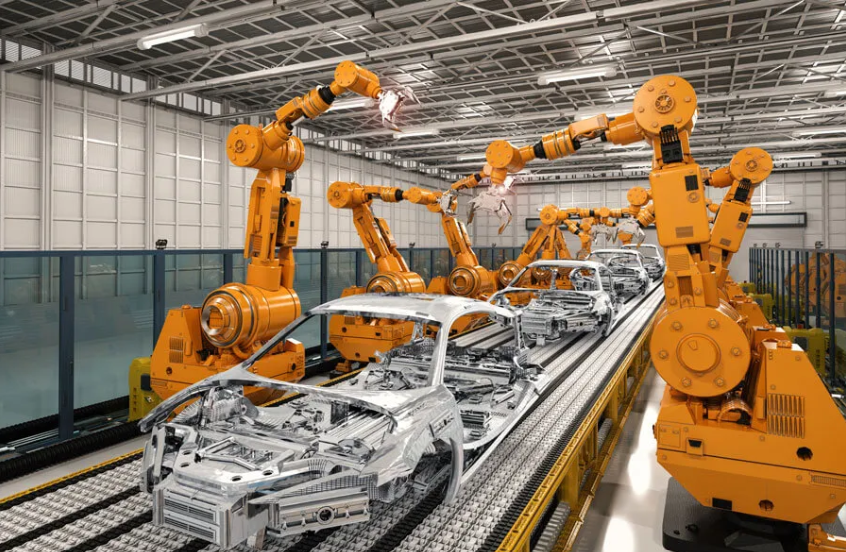
Automation is no longer a luxury—it’s a necessity for industrial spaces aiming for efficiency, precision, and cost control. However, many businesses struggle with high initial investment costs and resistance to change.
By designing industrial spaces with automation-readiness in mind, business owners can reduce labor costs, minimize errors, and improve production speed. Facilities equipped with IoT-enabled sensors, automated material handling systems, and real-time monitoring tools significantly outperform traditional factories.
Implementation:
Integrate IoT-enabled tracking and AI-driven predictive maintenance.Use automated material handling systems to reduce manual labor inefficiencies.Design smart factories with adaptable infrastructure for future automation upgrades.
Risks of Not Implementing:
Without automation, businesses struggle to keep up with modern efficiency demands, leading to higher labor costs, production errors, and wasted resources. Manual processes increase the risk of downtime, inefficiency, and lost revenue.

4. Prioritize Energy Efficiency & Sustainable Design
Energy costs are one of the biggest ongoing expenses in industrial operations. A poorly designed industrial space consumes excess energy, wastes resources, and incurs high maintenance costs. Implementing energy-efficient design from the start can significantly cut costs and ensure compliance with environmental regulations.
Smart industrial design incorporates natural lighting, optimized ventilation, and energy-efficient HVAC systems to reduce long-term operational expenses. Sustainable materials and waste reduction strategies also help lower environmental impact while improving efficiency.
Implementation:
Use LED lighting, solar energy, and energy-efficient HVAC systems.Incorporate natural ventilation and daylight harvesting in building design.Implement water recycling systems and eco-friendly building materials.
Risks of Not Implementing:
High energy costs lead to ongoing financial strain. Failing to adopt sustainable practices can result in regulatory fines, higher maintenance costs, and inefficient industrial processes that hurt profitability in the long run.
5. Understand the building codes to use it to your advantage.
Industrial projects often face delays due to slow permit approvals, environmental regulations, and safety requirements. A proactive approach to compliance and legal approvals can prevent unexpected roadblocks and project hold-ups.
Early engagement with regulatory consultants ensures fast approvals and adherence to local zoning laws, fire safety, and pollution control norms. Building with regulatory foresight avoids costly last-minute modifications.
Implementation:
Engage regulatory consultants and compliance experts early in the project.Ensure building plans align with fire safety, zoning, and pollution control laws.Maintain proper documentation and compliance checklists to avoid approval delays.
Risks of Not Implementing:
Projects without regulatory foresight risk being shut down, facing penalties, or undergoing costly redesigns. Delays in approvals result in financial losses and project stagnation.

6. Use Data-Driven Project Management for Precision & Cost Control
Poor project management is a major cause of industrial construction delays, budget overruns, and inefficiencies. Adopting a data-driven approach enables real-time decision-making, risk management, and cost control.
Modern construction management software and AI-driven analytics help businesses track progress, monitor budgets, and identify bottlenecks before they escalate. Predictive maintenance systems also reduce unexpected equipment failures.
Implementation:
Use real-time project tracking software to monitor costs and timelines.Implement AI-driven predictive analytics for equipment and process optimization.Regularly assess KPIs and workflow performance metrics to maintain efficiency.
Risks of Not Implementing:
Without data-driven management, projects suffer from mismanagement, unexpected expenses, and uncontrolled delays. Poor visibility into project progress leads to waste, inefficiencies, and financial losses.
Final Thoughts
For Industrial Visionaries and Business Owners, smart industrial design is not an option—it’s a necessity. By implementing modular and scalable layouts, optimizing workflows, leveraging automation, prioritizing sustainability, streamlining regulatory approvals, and adopting data-driven management, business owners can prevent delays, save money, and future-proof their industrial spaces.
Ignoring these strategies can result in expensive delays, compliance issues, inefficient operations, and lost revenue. The cost of not implementing these hacks is far greater than the investment required to integrate them.
